Monday, April 4, 2016

Amount of SMP in intervention tops 100,000t

The amount of skimmed milk powder (SMP) in public intervention so far in 2016 has exceeded 100,000t.

The amount of SMP placed into public intervention by all 28 EU member states by 31 March 2016 is 103,749t, just a few thousand tonnes shy of the former maximum limit of 109,000t.

This limit was increased at the meeting of EU agriculture ministers on 14 March to 200,000t, meaning the intervention ceiling was almost doubled.

Given how close member states already are to the former ceiling, it seems the increase came just in time.

Ireland last used the support measure on 29 March 2016, when it placed 608t of SMP into intervention. So far this year Ireland has placed a total of 6,789t into public intervention.

For the whole of 2015 this amount was much lower at 1,843t.

Belgium is the highest user of public intervention for SMP so far this year, having placed a total of 22,273t of product into intervention by 31 March 2016. 
Resource :http://www.farmersjournal.ie/amount-of-smp-in-intervention-tops-100-000t-204819

Cattle economics: When milk turns sour for parched and singed Marathwada

Kantilal Bhosale has no idea that skim milk powder (SMP) prices at the New Zealand dairy giant Fonterra’s global e-auction platform have collapsed to $ 1,731 per tonne from the all-time-high of $ 5,142 less than three years ago. Nor is the 38-year-old, who farms two acres at Kasari village in the severely drought-hit Ashti taluka of Maharashtra’s Beed district, aware of India having an 18 per cent share of global milk production.

All he knows is that the milk that fetched him Rs 24 a litre last year today commands just Rs 15.

Bhosale would be willing to sell one of his three cows, but for the fact that there are no takers for them. The Maharashtra government’s comprehensive ban on cattle slaughter and beef consumption, imposed last March, has made it tough to find even transporters, with stories doing the rounds of police cases being slapped against van-drivers ferrying animals to markets.

While the ruling Bharatiya Janata Party’s legislator from Ashti, Bhimrao Dhonde, was quickly shushed after he voiced his dissent against the ban earlier this month, the closure of a significant income avenue via sale of non-productive animals — especially in these times of drought and crashing milk prices — is an irritant for many farmers like Bhosale.
“You paid Rs 20 for that one-litre bottle of water, right? I sold a litre of milk for Rs 17 today,” says Rajendra Giri, 40, displaying his receipt from the Dattakrupa Dairy in Tawalwadi, which is just a kilometre away from Kasari. He will be paid at the end of the week, a ‘pagaar’ (salary) that will help bring the vegetables and lentils for the next meal.

Bhosale and Giri are spending a scorching afternoon huddling under the hay-roofed shed of a cattle camp near Kasari. There are currently 297 such camps in Beed, Osmanabad and Latur, the three most-parched of the eight districts comprising the Marathwada region that also includes Nanded, Parbhani, Hingoli, Jalna and Aurangabad.

Unlike the two Kasari residents, who have no choice but to sell to the local dairy at Tawalwadi, Bhausaheb Aagam is somewhat better placed. He lives just 8 km from Beed city — as against 90 km for Kasari — where milk is retailing at Rs 32-35 per litre. At 10 am in the crowded Bashir Ganj area, Aagam has been standing for over three hours with a large aluminium jerry can at his feet, its lid snugly closing around the half-litre measuring ladle hooked at the mouth.

“I get at least Rs 10 per litre more than what it would be at the village,” Aagam says of the Rs 30 price he has managed to hold on to, even with customers who drive a hard bargain. Aagam drives the 8-km distance to the city in his own mini-van, while counting himself among the lucky few with an easy access to a market that doesn’t require dealing with procurement agents or a cooperative set-up: “The only people in Marathwada still able to make a living out of milk are people like me, working alone”.

For the region’s milk producers, facing their third drought in four years, the price that a litre of milk can get depends not just on its fat and solids-not-fat content, but also on whether they are selling to an agent stopping at the farm, going on their own to a dairy, or able to directly access a market of end-consumers.

“There aren’t any big private dairies in Marathwada or Vidarbha barring one or two, while the cooperative milk sector is almost non-existent in these two regions,” notes Dattatray Vishwanath Ghanekar, managing director of the Kolhapur Zilla Sahakari Dudh Utpadak Sangh, which owns the popular ‘Gokul’ milk brand and is based in western Maharashtra. Out of the estimated 80 lakh-plus litres per day of milk procured by organised dairies in the state — with near equal shares for the private sector and cooperatives — the Marathwada region’s
contribution is less than five lakh litres or so.

According to Ghanekar, most farmers in Marathwada and Vidarbha have only local non-descript animals. Now, with drought and low milk prices delivering a double-whammy, the few who maintain cross-bred cows and high-yielding buffaloes are making distress sales. Healthy three-year-old cross-bred milch cows are today being sold at Rs 22,000-24,000, compared to Rs 45,000-50,000 in normal times. The buyers here are mainly from western Maharashtra.

It is the low-yielding indigenous/non-descript breeds that have no takers, including traders who were earlier supplying to slaughter houses. These animals are the ones mainly populating the cattle fodder camps sponsored by the state government.

Santosh Chavan, a BJP leader from Ashti who has the contract to run the Kasari camp, points out that the village had some 1,000 animals until a year-and-a-half ago, when milk prices, too, were good. That number is down to 550-600, as some have died and others sold off. Also, of the five dairies operating in Kasari and nearby villages, the biggest one alone was procuring 6,000 litres a day of milk. “Now, they together purchase 1,500 litres. The remaining milk has no buyers. So, producers simply sell at lower and lower prices,” adds Chavan.

Ghanekar does not foresee any immediate improvement in the situation. The main reason is global dairy product prices: These would remain under pressure from China’s mounting economic woes, the Russian-West spat leading to surplus milk supplies in Europe and made worse by the end of the earlier regime of production quotas, and falling oil prices resulting in lower imports by West Asian countries.

India’s own SMP imports have fallen from a peak of 1.30 lakh tonnes (valued at Rs 2,717.56 crore) in 2013-14 to 34,490 tonnes (Rs 681.69 crore) in 2014-15 and further to 9,193 tonnes (Rs 174.21 crore) during April-December 2015-16. Maharashtra’s private dairies, unlike the cooperatives that have a strong liquid milk marketing business, are mainly into production of commodities like SMP and ghee. The crash in global prices has affected their operations, causing them to slash milk procurement and pay lower prices to farmers.

Meanwhile, in the cattle camps, nobody really cares about the wider economics. “Fix a minimum price for milk and a minimum purchase commitment by the government. For us, there is no other means of livelihood left,” declares Giri.
Resource:http://indianexpress.com/article/india/india-news-india/cattle-economics-when-milk-turns-sour-for-parched-and-singed-marathwada/
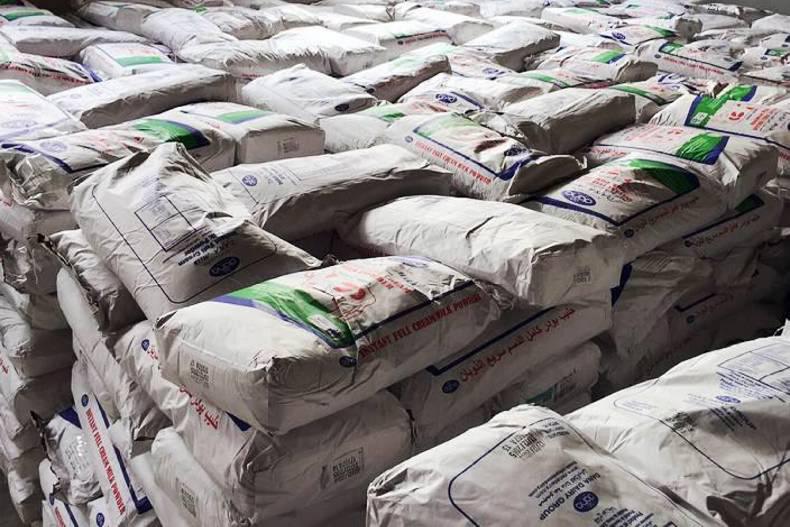
Glut of skim milk in Ontario costing P.E.I. dairy farmers

Ontario dairy farmers have a problem and its cost is trickling across borders all the way to P.E.I.
According to reports out of the Dairy Farmers of Ontario (DFO) policy meeting, held last week, Ontario dairies have produced millions of litres of skim milk that they don’t have a market for, which means they’ve had to spend more than $1 million to dispose of it. Most of that milk has ended up in animal feed and some has gone straight to manure piles for fertilizer.

P.E.I. dairy producers, as part of the eastern Canadian milk quota body consisting of Ontario, Quebec and the Maritimes, known as the P5, are on the hook to help pay for the cleanup.

“Sharing revenue also means sharing costs,” said Harold MacNevin, chairman of the Dairy Farmers of P.E.I.

“There’s costs associated with filling the market … but there’s also costs if you don’t have a market for a (milk) component.”

MacNevin was unsure as to exactly how much the dumping will cost P.E.I. producers.

Ontario farmers have paid between 40 and 50 per cent of the cost of that disposal, which was about $1.4 million for the latter half of 2015, but the rest has been made up by the other P5 member province based on their shares of the total quota; P.E.I.’s share is about three or four per cent.

Established in 2010, the P5 Agreement is a deal where the dairy marketing boards in each of the participating province share their revenue and expenditures from the sales of fluid and industrial milk, the core concept being to ensure a stable return for producers across the region. The Canadian Dairy Commission administers the industry on behalf of farmers

Throughout the second half of 2015 the Canadian dairy industry was hit with a huge increase in demand for products produced with butterfat, leading to reports of a butter shortage going into the busy Christmas season.

To help deal with the shortage DFO diverted more milk for butterfat extraction and skim milk is a by-product of that process.

The liquid market for skim milk is minimal, but when dried into a powder, the milk is used in countless products. However, local processors were not prepared to deal with the sudden influx of skim milk last year, leaving DFO with nothing to do with its by-product but dispose of it however it could.

It’s estimated that DFO has been disposing of about two million litres of skim milk a week since Christmas and that’s expected to continue until at least May.
Resource  : http://www.journalpioneer.com/News/Local/2016-03-28/article-4479673/Glut-of-skim-milk-in-Ontario-costing-P.E.I.-dairy-farmers/1

Man arrested for selling expired milk

Afzal Gunj police remained dumbfounded when they listened to the confession of a man who was arrested on the charges of selling expired milk.

58-year-old Mahender Kumar Shah confessed that he sold expired milk powder by packing them in new packets with valid dates under the brand name ‘Milk Food — Spray Dried Skimmed Milk Powder’.

On a tip-off police arrested him from Maharajgunj. He was involved in this business for the past one year. The cops seized 350 kg of milk powder from the trader, Mahender Kumar Shah.

Afzal Gunj inspector C. Anjaiah said that, 58, a resident of old city, owned Sharada Enterprises at Mahboob Gunj and sold paper products. He procured packs with valid dates and packed them with the date-expired powder and sold them,” Mr. Anjaiah said. The cops also seized a packing machine from him.

Resource:http://www.siasat.com/news/man-arrested-selling-expired-milk-941085/

Higher Crude Oil Prices Could Lift Powder Prices

Crude oil prices, which lost nearly one-third of their value last year, helped dairy producers in many ways. The lowest crude oil prices in years lowered fuel and fertilizer prices, while putting more income into the pockets of U.S. consumers. At the same time, though, oil-dependent countries that are also importers of milk powders struggled with falling revenues, which could have worked to drag nonfat dry milk (NDM) and skim milk powder (SMP) prices lower.

Recovering oil prices could provide some positive news for dairy and milk powders,” says Sara Dorland, analyst with the Daily Dairy Report and managing partner at Ceres Dairy Risk Management, Seattle. “A rebound in milk powder purchases would likely help support higher world and U.S. milk prices.”

On Monday, March 21, the May NYMEX futures U.S. benchmark price for crude oil closed above $41 per barrel on the New York Mercantile Exchange. The May 2016 Brent crude oil futures price closed at $41.54 per barrel, up 53 percent from its 12-year low of $27.10 hit on Jan. 20. However, analysts were unsure whether the recent rally would continue based on concerns that energy companies could increase drilling now that prices are well off their lows.

“Crude oil and nonfat dry milk/skim milk powder prices tend to track one another because oil-producing countries are significant buyers of milk powders,” notes Dorland. “Higher oil prices generate income in these countries to support milk powder purchases.”

Saudi Arabia, Russia, the United Arab Emirates, Iran, Mexico, and Kuwait were all top-10 oil-producing countries in 2015, according to the U.S. Energy Information Administration. These countries are also significant buyers of milk powder buyers, according to Dorland.      

Plummeting oil prices last did little to deter sales of skim milk powder or nonfat dry milk to most countries. “In fact, nonfat dry milk and skim milk powder trade remained strong in many countries—likely due to the fact milk powder prices declined in lock-step with oil prices,” Dorland notes.

At the start of 2015, Dorland notes that the U.S. oil benchmark price was $52.69/barrel. By the end of the year, prices plunged 28 percent to $38.10. Over that same period, Dorland says that the CME NDM spot contract lost 25 percent of its value, dropping from $1 per pound to 75.5 cents.

“In other words, the decline in the two products remained consistent and likely helped to keep product moving to oil-producing nations,” she notes. “While a rise in oil prices does not necessarily translate into an immediate increase in nonfat dry milk and skim milk prices, it can support prices over the long run because increases in disposable income in these countries can potentially be allocated toward dairy product purchases.”

Resource: http://www.agweb.com/article/higher-crude-oil-prices-could-lift-powder-prices-naa-fran-howard/

Aavin to sell skimmed milk powder

Chennai: From Tuesday, Aavin will sell skimmed milk powder in retail. This follows the milk federation generating more than 75 tonnes of milk powder every day. "The federation, after distributing milk and also using it for producing milk-based products, is left with more than 75 tonnes of milk powder each day," said an Aavin official. With milk available in abundance after the procurement price being increased last year, there is plenty of milk powder stock available . Aavin said the powder will be available at 160 per 500g.

Resource:http://timesofindia.indiatimes.com/city/chennai/Aavin-to-sell-skimmed-milk-powder/articleshow/49993575.cms

Dairy prices likely to fall

 Dairy prices look likely to fall this week as the market buckles under the weight of increased supply from major European Union producers and as the strengthening New Zealand dollar once again fails to provide any cushioning effect for local exporters.

The GlobalDairyTrade price index has only managed to post one small gain - 1.4 per cent on March 2 - so far this year while all other sales have registered declines. Futures market pricing suggests a small decline is on the cards at Wednesday's auction.

"Futures premiums (to GDT) continue to be eroded so I would not be surprised to see prices at the next event to be down as well," Nigel Brunel, director financial markets at OM Financial said. "There are still a few days to go but the market just feels weak."

ANZ agri economist Con Williams said the news flow had not been overly positive for the sector over the last few weeks.

"China's dairy imports over February were not great, stocks are high in the United States, and the milk flow in the major producing countries - particularly Europe -continues to grow," he said.

To add insult to injury, the New Zealand dollar - despite a sharp pullback in the aftermath of last month's surprise rate cut from the Reserve Bank has gone from strength to strength, further eroding the value of export receipts.

The Reserve Bank's Trade Weighted Index is now 4 per cent higher than mid-way through last year, despite four successive interestrate cuts from the central bank over that time.

"This resilience is in part a result of how high New Zealand interest rates are relative to other countries, which is attractive to investors," ASB Bank said.

Declines in the USD have been more dramatic than we expected, which has supported the Kiwi, ASB said.

The resilience of the NZ dollar is one of the main reasons and others expect the official cash rate to be cut to 1.75 per cent from the current 2.25 per cent later this year. Most dairy farmers are now producing milk at well below the average break even point of $5.25 per kg of milk solids.

Fonterra has confidence that the market will will come back into equilibrium and that dairy prices will reflect that over the next six to 12 months, but others are not so sure.

Matt O'Regan, chairman of the country's second biggest dairy cooperative, Westland Milk, fresh back from Europe to meet customers, farmers, processors, traders and trade policy advocates, said the news from the continent was not good.

"The milk growth rates in Europe are increasing rapidly and expect this to continue for at least 2 years until economic or environmental factors constrain these farmers," O'Regan said in note to suppliers.

Certainly the latest data from the EU does not make for easy reading; wholemilk powder production in the month of January was up 23 per cent on same month last year, and skim milk powder production was up 12.5 per cent over the same comparative months.

Even domestically, production has continued to run at relatively high levels as drought effects from the El Nino weather pattern failed to materialise for most parts of the country.

Dairy Companies Association of New Zealand data for February showed milk production was up 5.7 per cent compared to the same month last year. Credit ratings ratings agency Fitch said growth in global milk supply continues to delay a recovery in milk prices.

This has been compounded by weak demand growth globally, mainly due to subdued Chinese demand and a Russian embargo on major Western dairy exporters, it said.

Fitch believes the recent volatility in global dairy prices is likely to continue in the medium term. However, in the longer term, the fundamentals of dairy demand remained strong. 

Resource:  http://www.odt.co.nz/news/business/378429/dairy-prices-likely-fall